How to Sell Homes Before Construction Starts
· Off-plan sales fund construction and de-risk the whole project. Here is how visualizations, 3D floor plans and a dedicated website get buyers to commit before the building exists.
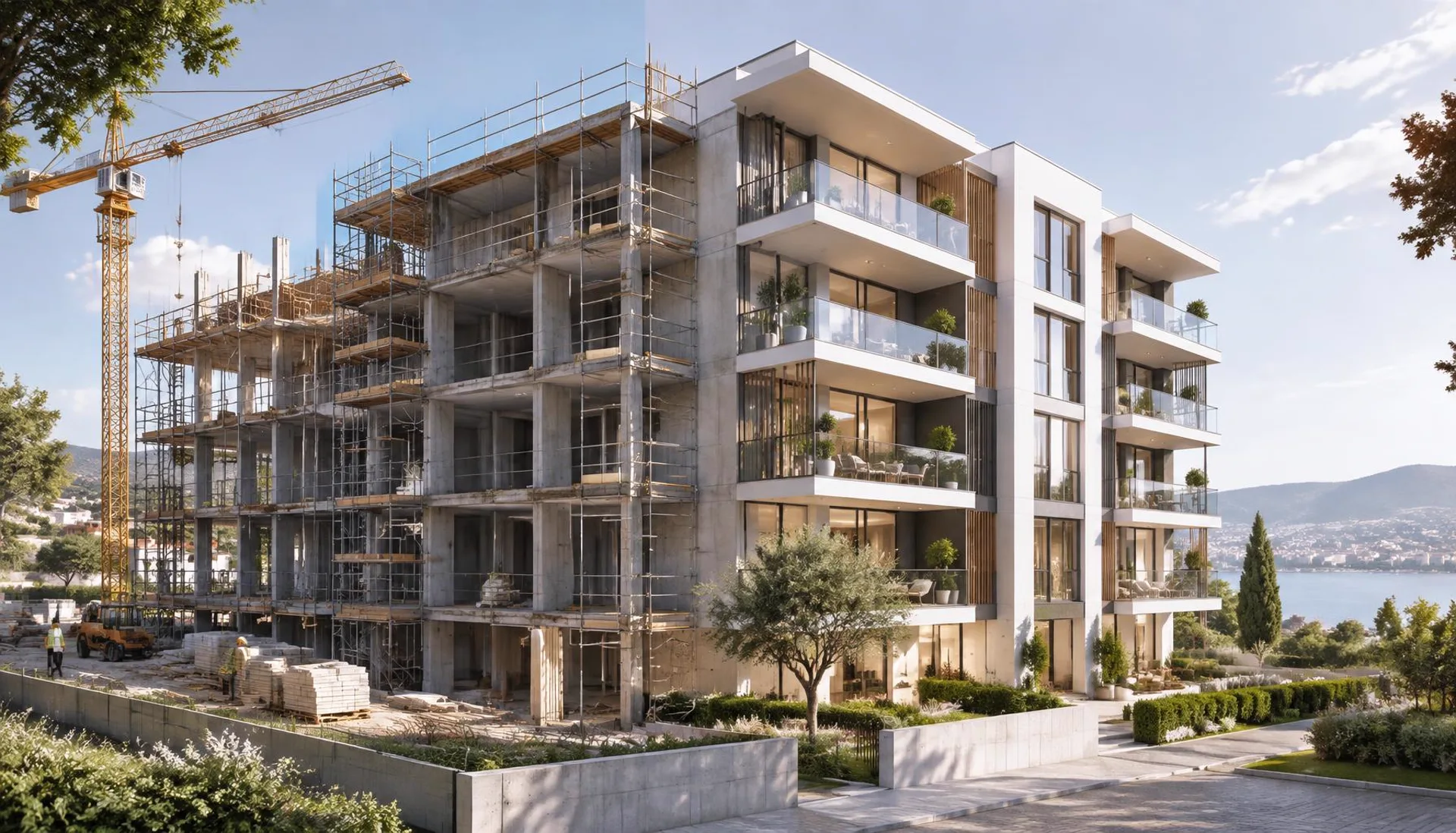
Selling homes before construction — off-plan, from the drawing board — is how strong developments de-risk financing and prove demand to lenders. But it asks something unusual of buyers: commit to a home they cannot walk through. Closing that gap is a marketing problem, and it is solved with three things: images buyers can feel, plans they can understand, and one place where it all comes together.
Why buyers hesitate
Every objection to buying off-plan is a version of the same sentence: "I cannot see what I am buying." The construction site shows concrete and scaffolding. The 2D floor plan shows lines only an architect reads fluently. The price list asks for trust without offering evidence.
Marketing that works removes each of these frictions deliberately.
Show the finished home, not the construction site
Photorealistic exterior and interior visualizations are the single most effective tool in off-plan sales. They let a buyer stand in the living room, look at the evening light on the facade, and picture their furniture in the space. That emotional step — from *evaluating* a project to *imagining living in it* — is where reservations happen.
A few rules make the difference:
- Quality is the message. A cheap render tells buyers the developer cuts corners. A precise, atmospheric one tells them the opposite.
- Show the context. Street views, the entrance, the view from the balcony — buyers are purchasing a location as much as a floor plan.
- Be consistent everywhere. The same images should appear on the website, in the brochure, in the advertising and in the sales office.
Make the layout readable in seconds
Most buyers cannot read a 2D architectural plan. A 3D floor plan translates it: furniture to scale, room proportions, how the kitchen connects to the terrace. Buyers compare units by themselves, shortlist their favourites, and arrive at the sales conversation already half-decided. That shortens the sales cycle and reduces the workload on the sales team.
Give everything one home
Scattered assets leak buyers. The render lives in a PDF, the floor plans in an email attachment, the price list with a broker, the location story nowhere. A dedicated development website assembles all of it behind one memorable address — the project's name as its own domain — with a clear path from first impression to registered interest.
That one link then carries the whole campaign: billboards, portals, social ads, broker emails and word of mouth all point to the same place, and every visit is measurable.
The practical order of work
1. Visualizations first — they take the longest and define the project's look everywhere else. 2. 3D floor plans per unit type — so every layout in the price list is understandable. 3. The website at launch — live before the first advertising euro is spent, with a registration form capturing early interest. 4. Everything else feeds it — brochures, ads, signage and sales materials reuse the same assets.
This is precisely the bundle our Real Estate Development Websites service delivers from one studio: the renders, the plans and the website on one timeline, so nothing waits on another supplier.
Planning a launch? Tell us about the project and we will map out the fastest route from drawing board to first reservation.