What Is Virtual Staging? A Practical Guide for Sellers and Agents
· Virtual staging furnishes an empty room digitally, using the real photograph of the space. Here is how it works, when it beats physical staging, and where its limits are.
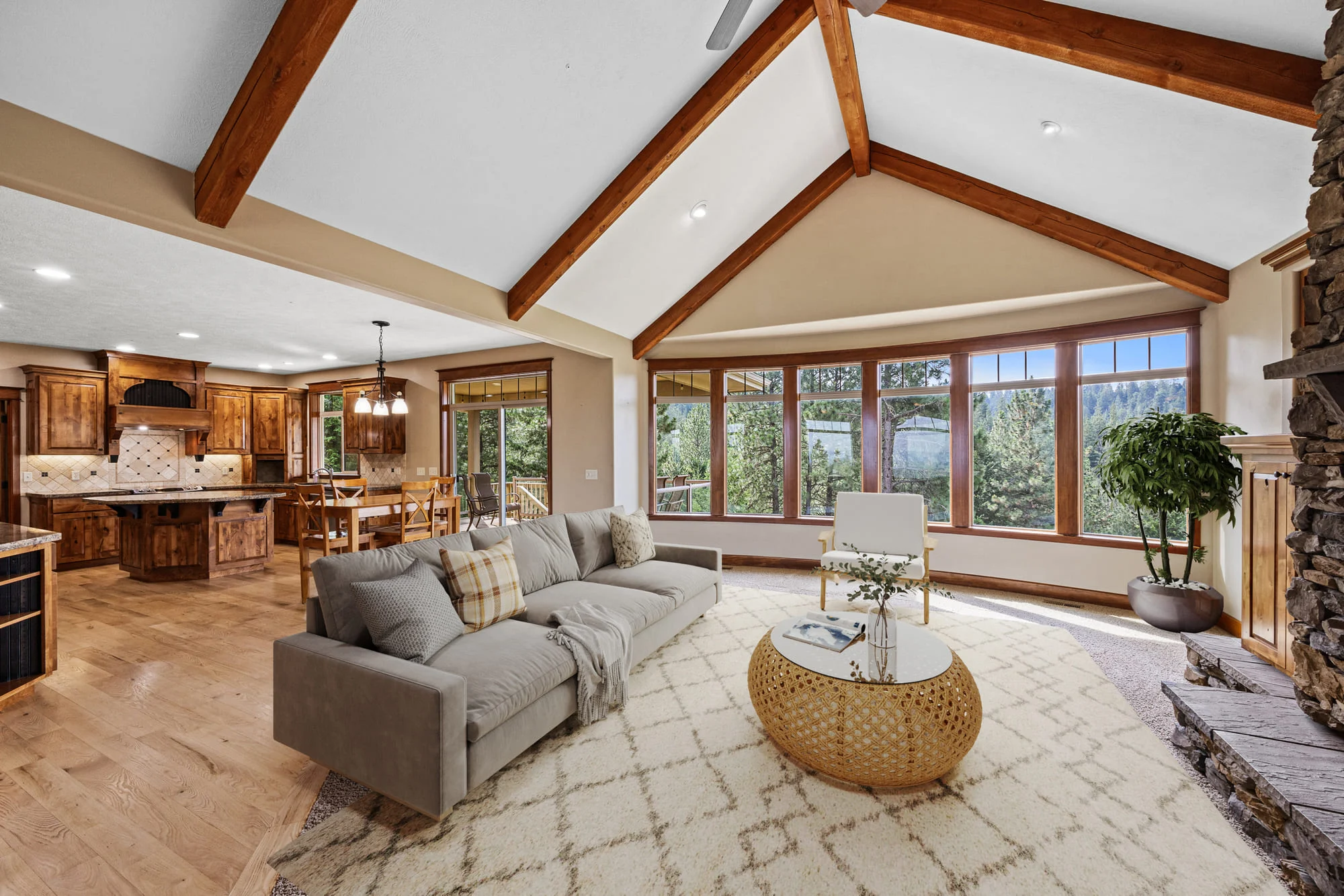
Virtual staging is the digital furnishing of a real room. A photographer shoots the empty space, and an artist then adds furniture, lighting, textiles and decor directly into that photograph. The walls, windows, floor and proportions stay exactly as they are — only the contents are new.
For a seller, the point is simple: an empty room is hard to read. Buyers struggle to judge whether a sofa and a dining table will both fit, and a bare floor makes a room look smaller than it is. A staged photograph answers that question in one glance.
How the process works
- The empty room is photographed straight, with even light and as little distortion as possible.
- A style is agreed — Scandinavian, contemporary, classic, family, rental — so the furnishing matches the buyer the listing is aimed at.
- The artist builds the scene into the photograph, matching the room's own perspective, light direction and shadow softness.
- The seller reviews the draft and asks for changes; furniture swaps at this stage are normal.
- The final image is delivered in web and print resolution for the portal listing, the brochure and social posts.
At StageHomy virtual staging starts at €30/$35 per image, and the turnaround depends on how many rooms are in the set.
Virtual staging versus physical staging
Physical staging means renting real furniture, transporting it, arranging it, and removing it after the sale. It is the stronger choice when buyers walk through the property in person and the emptiness of the rooms is the main objection — nothing replaces sitting on an actual sofa.
Virtual staging works on the photograph, which is where most buyers form their first opinion. It costs a fraction of furniture rental, it can be done in days rather than weeks, and one room can be shown in two different styles for two different buyer groups. It is the practical option for a property that is already empty, for a unit that is still under construction, and for listings where the marketing budget has to stay tight.
Neither replaces the other. Many sellers use virtual staging for the listing photographs and keep a physically staged show apartment for viewings.
Where the limits are
Virtual staging changes the furnishing, not the property. It should never remove a structural defect, hide damp, straighten a crooked wall or invent a window. Doing so is not marketing — it is a misrepresentation that costs credibility at the first viewing, and in several markets it breaks advertising rules.
Two habits keep it honest:
- Label staged photographs as virtually staged in the listing.
- Keep an unfurnished version of every image available, so a serious buyer can see the room as it really is.
When it works best
- The property is empty, between tenants, or freshly built.
- The rooms are unusually shaped and buyers need help placing furniture.
- The apartment is small and needs a sense of scale, not decoration.
- The same unit is marketed to different audiences — investor, family, first-time buyer.
- Photography is already done and there is no time for furniture rental.
What makes a staged image believable
The giveaway of weak virtual staging is almost always light. Shadows that fall the wrong way, a rug that floats a centimetre above the floor, a sofa in a scale that no manufacturer makes — a buyer may not name the problem, but they feel that something is off, and the whole listing loses trust.
Good staging is quiet. The furniture fits real dimensions, the shadows follow the room's own windows, the reflections match the actual glass and floor, and the style suits the building rather than a catalogue. Done that way, nobody studies the furniture — they look at the room, and that is exactly the point.
If you want to see how this looks on real properties, browse the virtual staging work or ask for a quote with your own photographs.